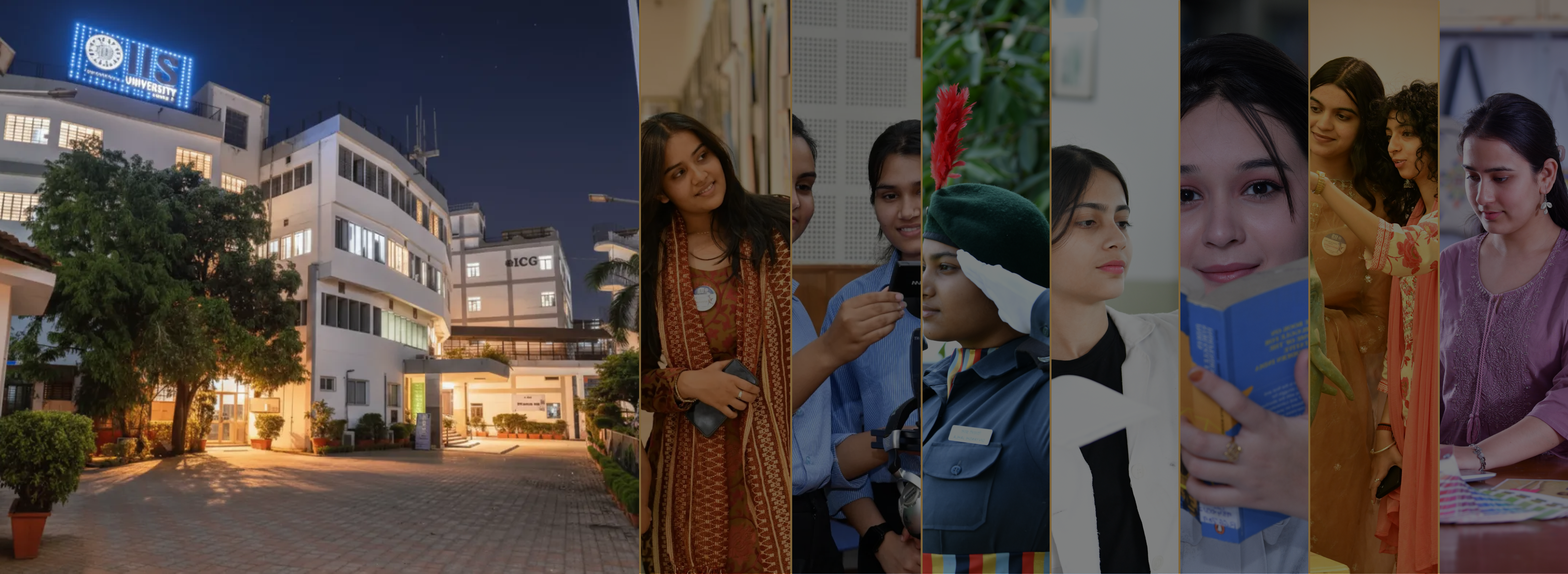
The Strategic Plan of IIS (deemed to be University) has been drawn to serve as a guiding light to the institution, to bring in efficiency in operation, assist in deciding between competing priorities, take decisions and actions which lead the institution towards a path of sustainability and move it away from stagnation.
The thrust is on multidimensional approaches to achieve significant goals in four areas namely, Academic Excellence, Research and Development, Infrastructure and Resources and Stakeholders' Management and Collaboration, which are critical to the University's future.
These areas have been refined and articulated more recently as "University Priorities" and will guide in designing strategies, and position IIS University as a University with academic excellence - excellence in teaching and research, social responsibility and accountability not only at the national, but also at the international level.
The institution is conscious of the current global challenges including the global socio-economic, political and cultural contexts, impact of the emerging information society, the technological advances, the democratization of educational opportunities, diversification in higher education in terms of its function, structure and organization, educational spending, need for quality assurance, the aspirations of today's youth and, the need for bringing forth creativity, innovation and research to solve the problems of today's world.
It is in this context that Academic excellence, Research and Development, Infrastructure and Resources, Stakeholders' Feedback and Management, and Collaboration have been outlined as the fundamental pillars for the Institution's growth and development in the near future.
Goals
- To develop a combination of knowledge and skills to promote modern outlook and a scientific temper.
- To generate social consciousness among the youth to meet the challenges of the society and the world at large.
- To promote international understanding and world fellowship through global education and exchange of ideas, knowledge and the youth.
- To provide quality education for self-reliance.
- To groom into dynamic, charismatic and 'World Ready Citizens'.
Academic Excellence
Enhancing teaching-learning methodologies and curriculum development.
Research and Development
Fostering innovation and research culture among faculty and students.
Infrastructure and Resources
Developing state-of-the-art facilities and learning environments.
Stakeholders' Management
Strengthening relationships with students, faculty, alumni, and industry.
Strategic Goals
Academic Advancement
Develop knowledge and skills to promote modern outlook and scientific temper among students.
Social Responsibility
Generate social consciousness to meet societal challenges and promote sustainable development.
Global Citizenship
Promote international understanding through global education and cultural exchange.
Strengths, Weaknesses, Opportunities, Challenges (SWOC) Analysis
Strengths
- The University presently catering to women students in English-medium.
- Locational advantage of being situated in the state capital with excellent connectivity with the rest of the country.
- Air-conditioned hostels with all facilities/amenities.
- Sound academic reputation in the society.
- Diverse student-body drawn from different states and sections of the society to promote inclusive practices.
- Wide range of programmes/subject-combinations available to choose from.
- A plethora of well-designed professional and skill-oriented courses, besides the regular programmes, to foster global competencies.
- Mandatory inclusion of Career Oriented Skill Development (COSD) courses in the first year of graduation.
- Choice Based Credit System (CBCS) in professional programmes and a good number of Elective options in all other programmes.
- Grading System in all the programmes.
- Unique programmes in subjects like Psychology, Fashion Design, Jewellery Design, Fine Arts, B.Com. (Hons.) Chartered Accountancy, B.Com. (Hons.) Company Secretaryship, Learning and Development, etc.
- National Council for Teacher Education (NCTE) and All India Council for Technical Education (AICTE) approved courses offered.
- Integration of Massive Open Online Courses (MOOCs) as part of curricula, with a provision of credit transfer.
- Academic collaborations with reputed national/international institutions, agencies and corporations to develop globally relevant courses.
- Well-qualified, experienced and motivated faculty members.
- Healthy bonding and interaction between faculty, students and alumnae.
- Supportive and Student-centric approach comprising participative, experiential and problem-solving methodologies for an enhanced teaching-learning experience.
- Focus on the holistic development of students through a blend of curricular & co-curricular activities.
- A strong base for community outreach and extra-curricular activities; University has five units of NSS, out of which four NSS units and a half troop of N.C.C. Air Wing sponsored by the Government.
- Decentralised and participative governance at the University.
- Training and Placement Cell for co-ordinating activities like industry training, career guidance and placements.
- People of eminence from various fields associated with the University as members of its statutory bodies.
- Student-engagement through optimal use of ICT resources in overall functioning of the University; recent one being the switch-over to the virtual mode of teaching-learning and examinations during the pandemic leading to timely declaration of results and starting of new session.
- Strategic interventions in community with extensive Corporate Social Responsibility (CSR) and Extension-related activities.
Weaknesses
- Need to setup more laboratories with annexed lecture theatres.
- More Consultancy Projects by faculty members for resource generation and to bridge the gap between industry and academia.
- Need of research grants to strengthen infrastructure and enhance the quality of research.
- Requirement for more long-term strategic collaborations with reputed international/national institutions for promoting Research and Development as well as encouraging Faculty and Student Exchange Programmes.
- Need for creating more avenues for resource-generation.
- Need of more hostels for students.
Opportunities
- With the allotment of 30 acres of land by the Government of Rajasthan for the expansion of the University, new programmes of study can now be introduced leading to an increase in students-enrolments.
- Capability to the meet the growing demand for specialized, professional and industry-based courses.
- Strengthening vocational education through UGC-sanctioned programmes such as B.Voc.
- Fostering collaborations/tie-ups with other public/private sector/non-profit institutions for academic enrichment of teachers and students alike.
- Availing research grants from Government/Non-Government agencies to support the University's research endeavours and related initiatives.
- Attracting alumnae, business houses, foundations etc., for instituting endowments.
- Effectively reshaping education delivery (online teaching-learning) for international and off-campus delivery of online courses/programmes and promoting exchange programmes.
- Collaborations with national and international academic bodies such as Association of Chartered Certified Accountants, to develop global courses.
- Introducing industry-oriented courses as per the requirements of the global economy.
Challenges
- Dwindling resources from the State/Central Government and increasing dependence on revenue from tuition fee of students.
- Burgeoning of private and profit-driven universities/colleges in the area.
- Increasing trend of students' migration to metropolitan and Tier I cities of the country and to foreign universities for higher education.
- Flux in parents' and students' decisions regarding what locations they should select for higher education in the post COVID times keeping in view health safety and to minimize health risks.
- Compulsion to compete with the growing presence of state-funded universities in the state.
- Attendance-related issues of students preparing for various competitive/entrance examinations at local institutes/coaching centres.
- Attracting a larger number of foreign students.
- Resource-mobilization through consultancy and research.
Themes and Focus Areas
Academic Excellence
Since its inception, IIS (deemed to be University) has been a leader in fostering an eco-system of academic excellence on its campus.
It is a place where everyone is welcome and encouraged to take ownership of her/his own learning and growth, stretch beyond their comfort zone, use time and opportunities meaningfully and put the skills being acquired, to use. The University is well-known for being at the forefront of knowledge co-creation, sharing, and dissemination.
Interactive teaching practices, setting high expectations, engagement, motivation, building strong relationships, providing constructive feedback based on performance data from time to time to students and faculty are stressed. The University is also known for playing a crucial role in valuing and engaging with the knowledge systems of this country and other nations.
The plan for achieving academic excellence is proposed under the following broad headings:
- Technology in teaching-learning
- Online and distance learning
- New programmes
- Academic advancement
Technology in teaching-learning
More than ever before, the University recognises that by incorporating digital technologies into the classroom it can bring about profound changes in the extent of student engagement and learning. This is being facilitated by providing them more autonomy and control over their own learning, building their digital competencies and preparing them to keep pace with the demands of a technology-based world.
The University will continue to adopt technology enabled pedagogy at all levels and encourage blended teaching methodology involving traditional, interactive, and ICT enabled pedagogical techniques to enhance the teaching–learning process.
Online and distance learning
Given their rising popularity and revolutionary potential, the University plans to offer accredited online and distance learning programmes in the future. For this, it plans to seek approval from the University Grants Commission, New Delhi, India. ICT enabled teaching, use of multimedia in virtual classrooms including next-generation technologies will be encouraged.
This will hopefully remove the physical, financial and geographical barriers that prevent many students from fulfilling their academic or career ambitions as well as give it visibility and recognition at the national and international levels. Quality online learning resources will also be developed and made available as e-content on the University website.
New programmes
The University will financially invest in and promote nationally recognized, job oriented and vocational programmes that attract students. These programmes will be aligned to cater both, to the industry requirements and the societal needs.
New, high-quality, integrated and compelling programmes with capacity to grow enrolments such as, B.A.-LL.B, B.Com.-LL.B, B.Sc.-LL.B, BBA-LL.B, BBA-MBA etc. will be developed along with advanced courses, such as Machine learning, Data Science, Artificial Intelligence, etc.
The University also recognizes the importance of advancing the institutional reputation and the need to take advantage of its disciplinary breadth to address the world's problems from multiple perspectives.
It is therefore planned to establish a School of Engineering, and a School of Medical Sciences & Pharmacy, in the next five years.
Academic advancement
The University promotes academic achievement and excellence through academic consultations, guest lectures, workshops, mentoring, student exchange programmes and scholarships to students.
Current faculty endeavours in designing of innovative course curriculum and teaching learning processes will be supported by providing the necessary academic freedom and flexibility to them. Additional avenues for enhanced educational opportunities, engagement with activities, groups, associations, and people will be explored depending on the needs and interests from time to time. Individuals with scholarly and teaching acumen will be contacted for inputs in the journals published by the University as well as in other co-curricular activities/events organized.
RESEARCH AND DEVELOPMENT
To foster an environment conducive to research with the potential of innovation and commercialization.
The University encourages interdisciplinary research and an entrepreneurial approach in all its students and provides them the freedom to investigate problems of significance and imagine and, work for a better future.
Research Infrastructure and Support
- The Centre for Research, Innovation and Training (CRIT) at IISU promotes research and innovation
- Research Promotion Committee and Industry-Academia Cell for advancing academic research
- Fully digitized University Library with upgraded infrastructure
- Innovation Cell (IIC) to support start-ups and innovations
- IISU Incubation Centre to nurture start-ups
- Intellectual Property Rights (IPR) Cell to assist innovators
Research Infrastructure Development
- Continuous improvement of physical research facilities and equipment
- Addition of new infrastructure based on strategic importance and impact potential
- Recruitment of experienced research faculty and trained technicians
- Expansion of library resources including books, journals, and digital content
Research Collaboration and Industry Partnerships
- Promoting collaborative and interdisciplinary research
- Establishing partnerships with academic institutions of national and international repute
- Strengthening industry-academia collaboration for research projects
Research Excellence and Publications
- Introduction of D.Litt./D.Sc. degrees and Post-Doctoral Fellowships
- Focus on faculty research projects and high-impact publications
- Encouraging publications in UGC CARE listed and SCOPUS/Web of Science indexed journals
- Publication of four peer-reviewed ISSN journals annually across disciplines
- Focus on patent filings and commercialization of research
INFRASTRUCTURE AND RESOURCES
Revenue Generation and Financial Sustainability
- Exploring diverse revenue sources beyond student tuition fees
- Pursuing grants, private donations, and fundraising initiatives
- Introduction of new professional and continuing education courses
- Offering consultation services and skill-sharing programmes
Technology and Digital Infrastructure
- Ongoing investments in information technology infrastructure
- Enhancement of teaching, learning, and research through technology
- Establishment of secure communication and information sharing systems
- Digital literacy programmes for faculty and students
New Residential Campus Development
- Development of a new eco-friendly, residential campus
- State-of-the-art facilities for 3000+ students and faculty
- New buildings for School of Law, School of Engineering, and School of Medical Sciences & Pharmacy
- Smart learning spaces with latest technology integration
Library and ICT Resources
- Continuous investment in library technology and resources
- Modernization of cataloguing and resource management systems
- Expansion of digital resources and online access
Sustainable and Green Campus
- Implementation of sustainable and eco-friendly practices
- Energy efficiency measures and use of renewable energy
- Improved waste and water management systems
- Promotion of pedestrian and cycling-friendly infrastructure
- Adoption of innovative green technologies
Key Focus Areas
Academic Excellence
Technology in Teaching-Learning
Integration of digital technologies to enhance student engagement and learning outcomes through blended teaching methodologies.
New Program Development
Introduction of innovative, job-oriented programmes aligned with industry requirements and global standards.
Research & Development
Research Infrastructure
Development of state-of-the-art research facilities and laboratories to support cutting-edge research.
Industry Collaboration
Strengthening partnerships with industries for collaborative research and innovation projects.
Infrastructure & Resources
New Campus Development
Establishment of an eco-friendly, technology-enabled residential campus with modern facilities.
Digital Transformation
Implementation of smart campus solutions and digital learning platforms to enhance educational delivery.
Our Core Values
Excellence
Commitment to the highest standards in teaching, research, and service.
Innovation
Fostering creativity and forward-thinking approaches to education.
Integrity
Upholding ethical standards and transparency in all our endeavors.
Inclusivity
Valuing diversity and creating an environment of respect and belonging.
Social Responsibility
Contributing to societal development and sustainable practices.
Global Perspective
Preparing students to be global citizens with cross-cultural understanding.
STAKEHOLDERS' FEEDBACK, MANAGEMENT AND COLLABORATION
The primary and secondary stakeholders of the University include students, parents, internal and external faculty, community, management bodies, other universities, accreditation agencies, funding agencies, alumni, NGOs, industry, etc. To make its activities worthwhile and satisfactory, the University puts a great deal of emphasis on taking feedback from its stakeholders from time to time.
Based on their needs, expectations, experiences, insights and suggestions, the teaching-learning, evaluation practices, operations and management initiatives are fine-tuned. This feedback is also used for setting priorities and allocating resources.
1 Students
Use of online platforms for teaching
The University is planning to incorporate different learning platforms (MOOC courses) available online, like COURSERA and SWAYAM or those developed by the University faculty, in its curriculum and transfer the credits to the students.
Integration of digitalization
Integration of digitalization in the teaching learning process by providing smart classrooms, wi-fi enabled campus, subscription of national and international online courses, E-journals, development of E-content to make the teaching-learning effective are planned.
Establishment of incubation centre
In addition to the existing Incubation Centre at the Gurukul Marg Campus, the University also plans to set up an Incubation centre in the new campus to give a wider platform to the students to develop their entrepreneurship and marketing skills. The mentors will support student entrepreneurs in determining and confirming market opportunities and help them in cultivating a plan to infiltrate those markets.
Digitalization
The University plans to develop its own Learning Management System to track student progress, manage content, identify training and learning gaps, utilize analytical data, facilitate reporting, manage classrooms, etc.
2 Staff members/Faculty
Motivation for Research
In the coming years, the University will encourage faculty and students to undertake research and related activities, such as preparation of research projects, publication of research papers in reputed journals, participation and presentation of the research papers in seminars/workshops/conferences. The tenure and funding amount for research projects taken up by faculty will be enhanced and possibilities of getting funding from other sources for research will be explored.
Quality of research will however receive priority over quantity of research under all circumstances.
Trainings/Faculty Development programmes
Proactive efforts will be made to upgrade the knowledge and skills of the faculty and contribute in their personal and professional development, and build educational leadership. Opportunities will be provided to acquaint them with the best practices in the country and abroad.
Use of ICT in the Teaching-Learning system
The University encourages the faculty to create a flexible and open learning environment with interactive, experimental and multimedia based delivery system. Learner autonomy and independence is promoted. Teachers and learners will continue to communicate and collaborate. Learning resources such as LCD projectors, models, modules, ready to use lab tools (online and offline), interactive language laboratory, computing laboratory, etc. will be used in the process.
3 CSR and Community Engagement
To make a positive contribution towards local communities the University plans to generate funds for taking up welfare activities for the marginalized, deprived and backward sections of the society. Faculty members, students and their parents, alumnae will be encouraged to serve the society in any form.
A committee will be constituted for needs assessment, execution and monitoring of social responsibility actions. Literacy camps, health awareness camps, social awareness camp, environmental awareness camp, human rights awareness camps will be organized in the adopted villages with assistance from local NGOs and Government departments.
It is hoped that this will also contribute in building a competitive advantage and a positive reputation for the institution.
4 Industry-Academia Interface
In the wake of quantum jump in technologies with global connectivity, the institutions have responsibility to provide not only the required skills and knowledge to their students, but also practical industrial experience. The University plans to initiate an Industry-Institute Interaction Cell to find out the gap between the needs of the industry and the end product of the institute.
This cell will assist departments in organizing workshops, conferences and symposia with joint participation of the industries and University faculties, enhance participation of industry experts in curriculum development, taking up projects jointly, coordinating/identifying industrial partners, setting up 'Centre for Excellence' and inviting Visiting faculty from industries.
The Cell will also encourage faculty members to use their expertise in solving the problems faced by the industries, thus creating opportunities for consultancy, industrial testing by faculty members or technicians, in-plant trainings for the students, identifying the areas for Executive Development Programmes in recent technological advances.
The University will provide research facilities to outsiders and will collaborate with different Indian and foreign universities for student and faculty exchange programmes.
5 International Tie-ups and Collaboration
Factors such as interconnectedness of the world today, mobility of students, scholars, diversity in programmes, need for building reputation and branding, emergence of the digital technologies, requirements of a global knowledge economy, etc. have made it crucial for Universities to embrace and integrate a global dimension into their purpose, functions and delivery of education.
In the past few years, IISU has taken some fragmented steps in this direction by admitting foreign students, conducting exposure visits and exchange programmes abroad for its faculty and students. However, going forward, a broader and more strategic approach to internationalisation is planned.
Proposed Objectives and Activities of the International Cell (IIS-TIE):
- Analysing Internationalization aspects & issues and forming strategies and planning accordingly.
- Setting up the Office and Structure of IIS-TIE and development of Website.
- Preparing Action Plans for international visibility and reputation of IISU through IIS-TIE
- Facilitating foreign students with all adequate infrastructure, quality education environment, adequate lodging & boarding facilities.
- Designing & Executing promotional campaigns abroad for attracting foreign students to the existing courses.
- Acting as 'Single Window' to the foreign as well as the local students for the solutions of all their queries and grievances.
- Seeking partnerships (MoUs) with foreign universities and providing opportunities to the stakeholders with regard to Academic Visits, Summer Schools, Flying Faculty, Joint Workshops/FDP/Conferences, Joint Degree (UG /PG) Programmes, Research Collaborations, UG /PG Programmes for International Students, Workshops for International Students/Faculty (Yoga, Fine Arts, Fashion/Textile, Jewellery Design, Social Sciences, etc.), Cultural Exchange Programmes, Education Tourism Programmes etc.
6 Strengthening Relationships with Alumni
The University understands that alumni can serve many important roles, such as building and growing its brand name through word-of-mouth, through social media, and other modes.
A registered ICG-IISU Alumnae Association- Bandhan - has been functional since the time of its inception and aims to encourage the alumnae of the University to take an abiding interest in the progress and development of their alma mater and reconnect with it from time to time.
The Association has recently been registered under the Companies Act, 2013 (Registration No. 071266).
Alumni Engagement Activities:
- Guest lectures/panel discussions/seminars to guide current students
- Support in organizing and participating in campus events
- Book donations to the central library
- Mentoring students for higher education and career guidance
- Sharing job opportunities through the Placement Cell
- Entrepreneurship guidance and support
- Employment as faculty and support staff
- Participation in academic and institutional committees
- Regular feedback for continuous improvement
Alumni Portal and Communication:
The University has created an Alumnae web portal to generate unique registration IDs, facilitate updates, and help alumni reconnect with batchmates and teachers. "Rewind", the Alumnae Newsletter is published bi-annually featuring alumni contributions, success stories, and achievements.
The University will continue to strengthen its relationships with its ex-students, involve them in, and seek their support in providing mentoring, arranging internships, career and placement opportunities, revenue generation, etc. in the coming times.